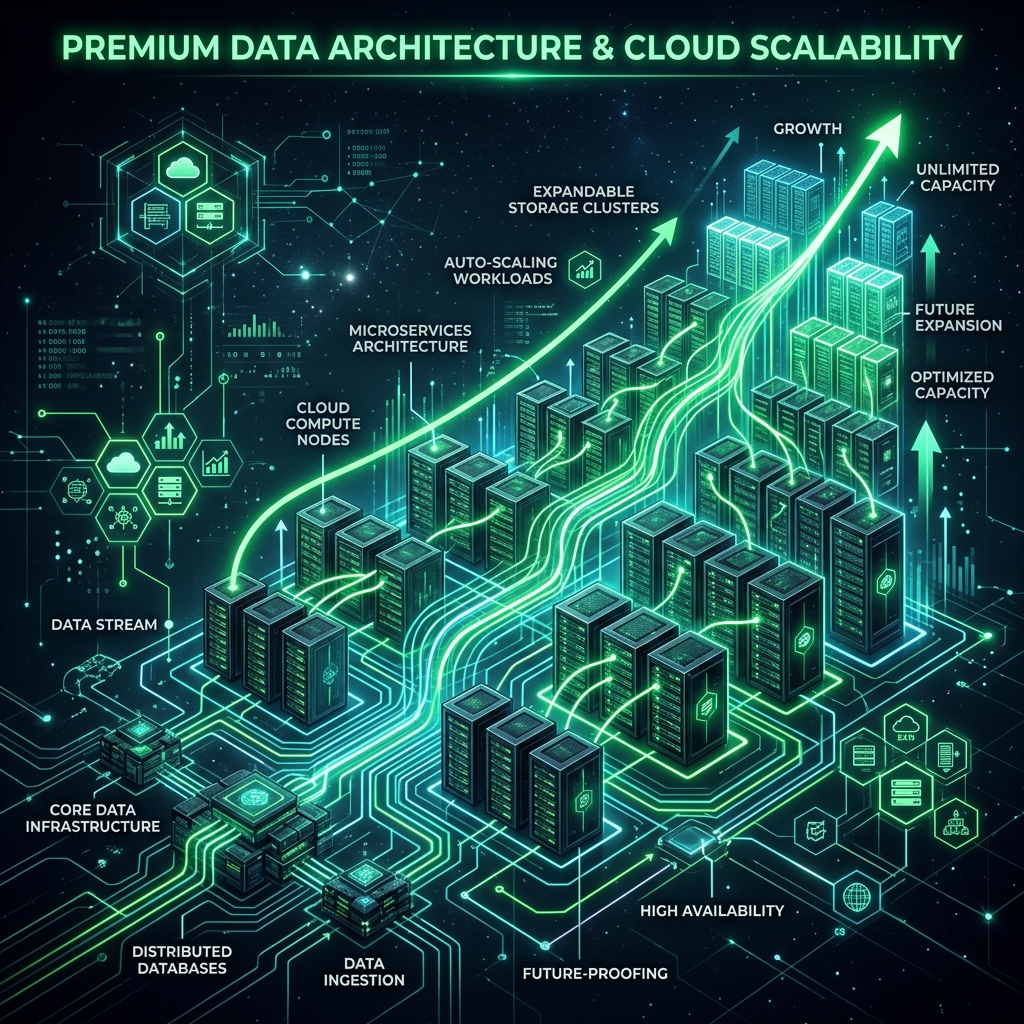
Scaling a SaaS application from hundreds to hundreds of thousands of users is one of the most challenging yet critical phases of growth. The infrastructure decisions you make early on can either enable smooth scaling or force expensive, time-consuming rewrites.
Start with Cloud-Native Architecture
Build on cloud platforms (AWS, Google Cloud, or Azure) from day one. This gives you access to managed services that scale automatically and eliminates the overhead of managing physical infrastructure. Use containerization with Docker and orchestration with Kubernetes to ensure your application can scale horizontally.
Database Strategy
Database bottlenecks are the most common scaling issue. Start with a solid relational database (PostgreSQL or MySQL) but implement proper indexing, query optimization, and connection pooling from the beginning. As you grow, consider read replicas for scaling read-heavy operations and database sharding for write-heavy applications.
Implement Caching Early
Caching dramatically reduces database load and improves response times. Implement Redis or Memcached for session storage, frequently accessed data, and API response caching. Use CDNs (CloudFront, Cloudflare) for static assets and media files. A well-implemented caching layer can reduce database queries by 70-80%.
Microservices vs Monolith
Don't start with microservices—it's a common mistake. Begin with a well-structured monolith that can be broken down later. As you scale, identify bottlenecks and extract them into separate services. Payment processing, email sending, and media processing are good candidates for early service extraction.
Monitoring and Observability
You can't scale what you can't measure. Implement comprehensive monitoring from day one with tools like Datadog, New Relic, or Prometheus. Track application performance, infrastructure metrics, and business KPIs. Set up alerts for critical issues and establish clear incident response procedures.
Auto-Scaling and Load Balancing
Configure auto-scaling groups to automatically add or remove servers based on traffic. Use load balancers to distribute traffic evenly across servers and provide high availability. Implement health checks to automatically remove unhealthy instances from rotation.
Background Job Processing
Move time-consuming tasks out of the request-response cycle. Use job queues (Sidekiq, Bull, or AWS SQS) for tasks like email sending, report generation, or data processing. This keeps your application responsive even under heavy load.
Security at Scale
Security becomes more critical as you scale. Implement rate limiting to prevent abuse, use Web Application Firewalls (WAF), enable DDoS protection, and regularly audit your security posture. Ensure all data is encrypted in transit and at rest.
Cost Optimization
Scaling doesn't have to be expensive if done right. Use reserved instances for predictable workloads, implement auto-scaling to avoid over-provisioning, optimize database queries to reduce compute costs, and regularly review and clean up unused resources. Monitor costs as closely as you monitor performance.
The Path Forward
Successful scaling is evolutionary, not revolutionary. Make incremental improvements, measure their impact, and iterate. Build strong foundations early, but don't over-engineer for scale you haven't achieved yet. The key is building systems that can evolve as your needs change.
Ready to build your product?
Nilezo Technologies helps founders and businesses in Vizianagaram and across India go from idea to launch.